


Porous Oxygen-Free Copper Seamless Conductors: Why Have They Become the Core Material of High-End Cables?
Release Time : 2026-05-13
In modern power transmission and high-density energy applications, every breakthrough in material science often leads to a leap in overall system performance. In recent years, the “Porous Oxygen-Free Copper Seamless Conductor” has evolved from a highly specialized term into a core engineering solution, becoming an indispensable material in new energy electrical systems, premium busway systems, and high-power electrical equipment.
 Its ability to replace traditional solid copper conductors and conventional stranded copper wires is no coincidence. Behind this innovation lies a combination of breakthroughs in structural mechanics, thermal management, electrochemistry, and advanced manufacturing technology.
This article explores why porous oxygen-free copper seamless conductors stand at the forefront of high-end cable materials by examining their material characteristics, structural advantages, manufacturing processes, and real-world applications.
I. Material Foundation: The Purity Advantage of Oxygen-Free Copper and Structural Innovation
1. How the “Pure Identity” of Oxygen-Free Copper Determines Electrical Performance
To understand the value of porous oxygen-free copper seamless conductors, one must first understand their base material: oxygen-free copper.
Compared with ordinary copper, oxygen-free copper is characterized by an extremely low oxygen content (typically below 0.001%) and an almost complete absence of oxide inclusions. During the smelting process, conventional copper easily absorbs oxygen, forming cuprous oxide (Cu₂O) impurities. These impurities accumulate along grain boundaries, significantly increasing electrical resistivity while also becoming starting points for stress concentration and corrosion during long-term operation under heat.
Oxygen-free copper is typically produced using high-temperature vacuum melting or inert-gas-protected smelting, followed by carefully controlled cooling processes that preserve the integrity of the copper crystal lattice. The direct result of this ultra-pure microstructure is outstanding conductivity reaching 100%–102% IACS (International Annealed Copper Standard), approximately 3%–5% higher than ordinary copper.
In continuous high-current-density transmission scenarios, even a slight difference in resistivity can lead to substantial power loss and temperature rise under hundreds or even thousands of amperes. Therefore, oxygen-free copper provides the superior electrical foundation required for premium cable systems.
More importantly, oxygen-free copper offers exceptional resistance to hydrogen embrittlement and oxidation. In high-temperature environments, oxide inclusions in ordinary copper create diffusion pathways for oxygen, eventually causing internal oxidation or cracking. Oxygen-free copper lacks these “defect channels,” and even when surface oxidation occurs, the oxide layer remains dense and self-limiting, protecting the internal conductor over long service periods.
This is one of the key reasons why high-end busway systems and new energy electrical systems increasingly rely on oxygen-free copper instead of conventional copper materials.
2. From Solid to Porous: A Structural Revolution
If oxygen-free copper provides excellent base material properties, the “porous structure” represents a complete redesign of the traditional conductor form.
Traditional cable conductors are either solid copper rods or bundles of stranded copper wires. Solid copper rods offer maximum conductivity but suffer from three major drawbacks:
Heavy weight
Limited heat dissipation area
Excessive rigidity, making bending and installation difficult
Stranded conductors improve flexibility but introduce contact resistance between strands, while heat tends to accumulate internally because cooling mainly occurs through the outer surface.
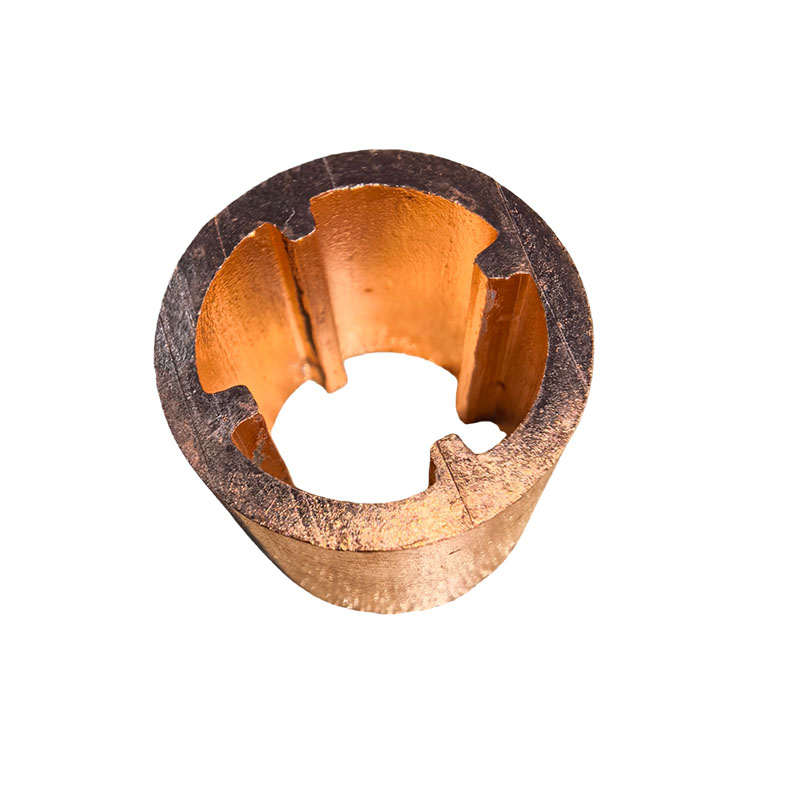
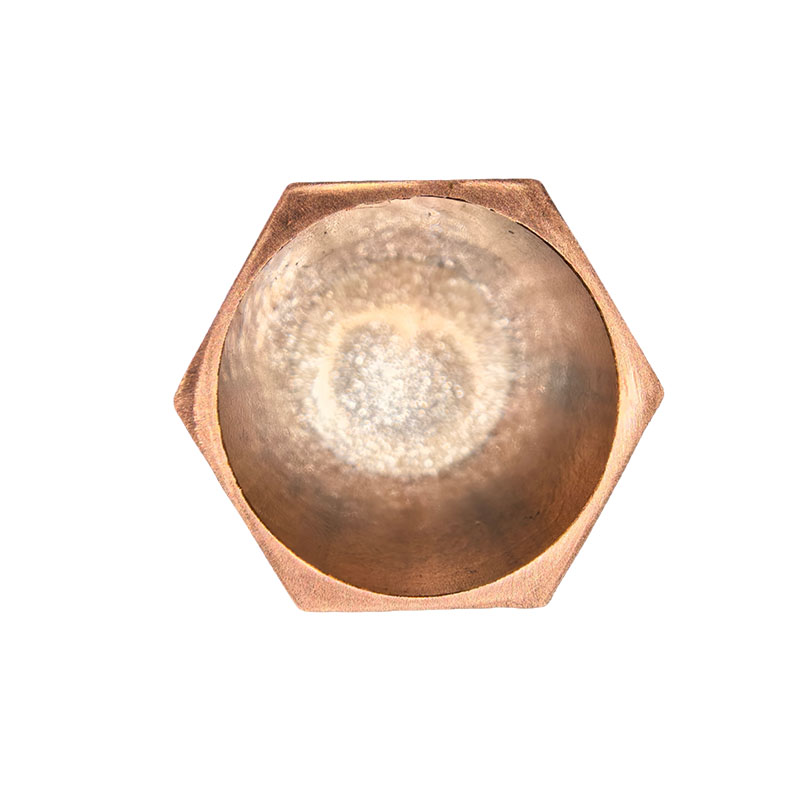
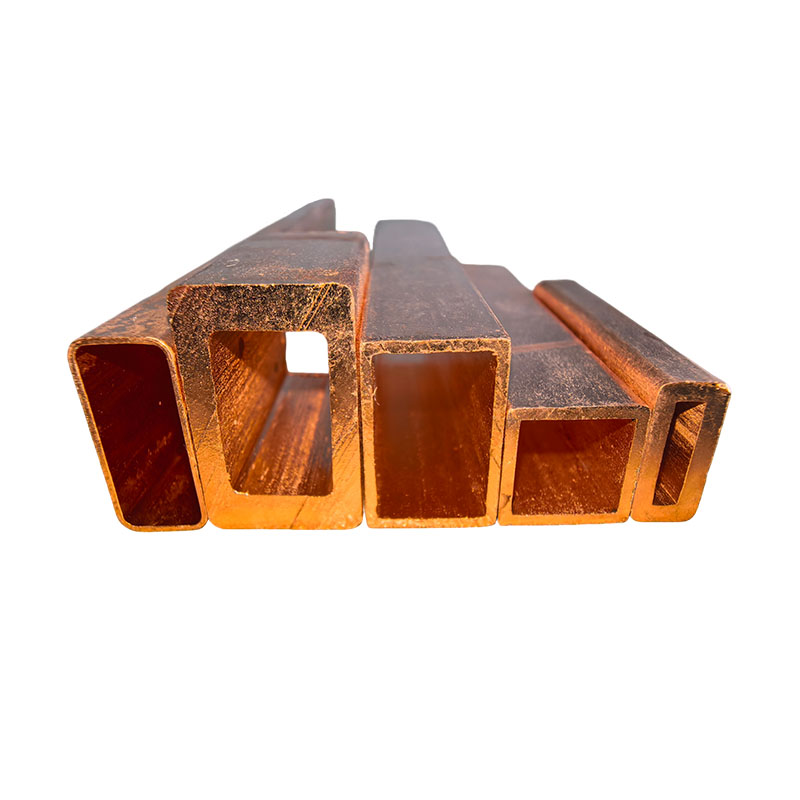
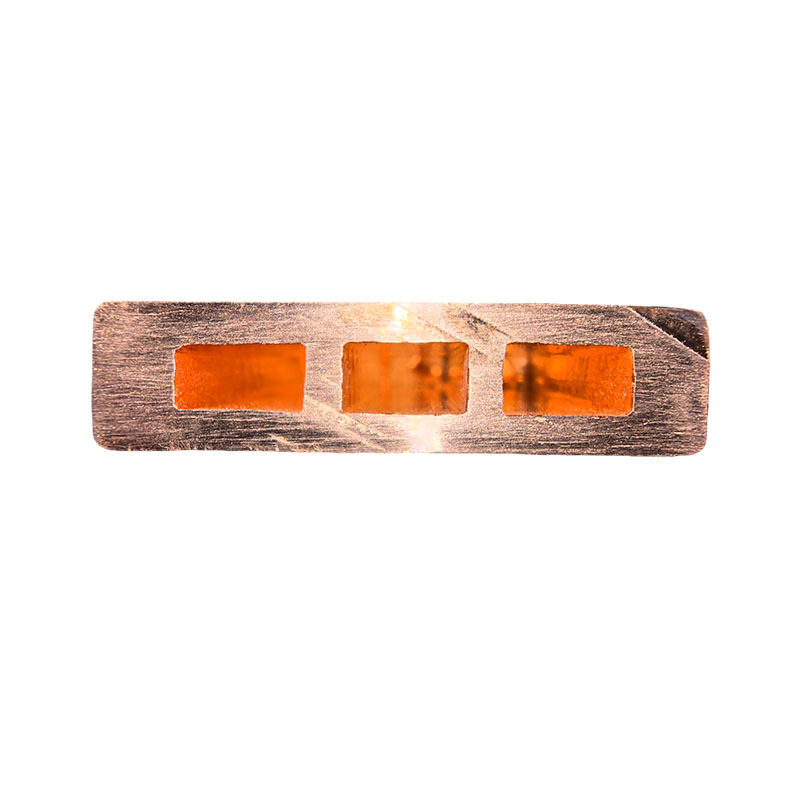
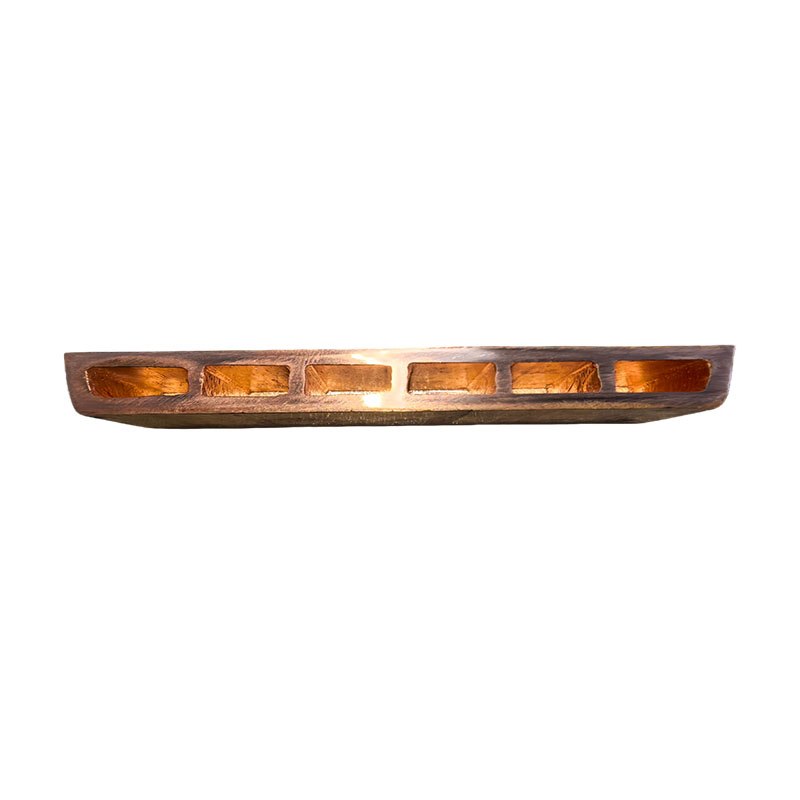
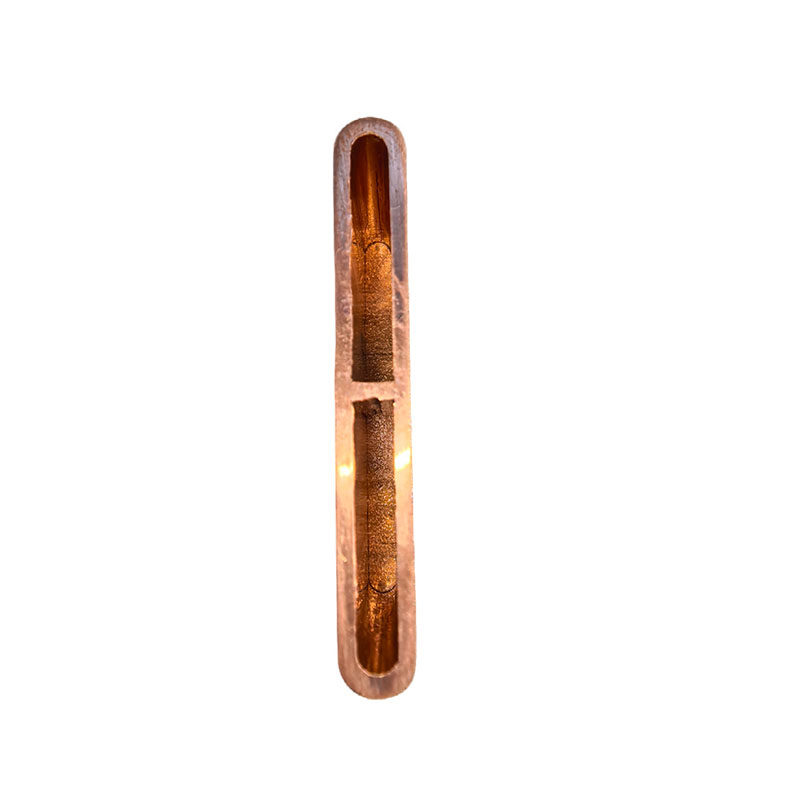
The innovation of porous oxygen-free copper seamless conductors lies in the longitudinal distribution of multiple independent channels throughout the conductor body. These holes run continuously from one end to the other, creating a capillary-like internal structure.
Critically, these pores are not mechanically drilled afterward. Instead, they are formed naturally during precision molding and cold drawing processes. The pore walls remain fully integrated with the copper matrix without seams or interfaces, preserving material continuity.
That is why the conductor is called “seamless.” Although internal air channels exist, the conductor remains a single continuous copper body.
This design simultaneously achieves three objectives once considered contradictory:
Maintaining high conductive cross-sectional area
Significantly reducing weight
Creating additional cooling channels
Due to skin effect and proximity effect—especially under AC transmission—the central region of a solid conductor often carries relatively low current density. The porous design strategically replaces these low-efficiency regions with air, reducing unnecessary copper usage without substantially compromising current-carrying capacity.
Under the same outer diameter, porous oxygen-free copper conductors are typically 15%–30% lighter than solid copper rods while often exhibiting higher structural strength because tubular and honeycomb-like structures inherently possess superior mechanical performance under bending and compression.
II. Core Technical Advantages: Four Key Dimensions
1. Multi-Channel Parallel Transmission: Redefining Circuit Architecture
Modern high-end electrical systems increasingly demand higher integration density. Electric vehicles, energy storage converters, and data center UPS systems frequently require simultaneous transmission of multiple high-current circuits.
Traditional solutions rely on separate cables or multi-core insulated cable structures, both of which increase weight, diameter, electromagnetic interference, and complexity.
The multiple independent channels inside porous oxygen-free copper conductors offer a revolutionary alternative. These channels can function as independent routing paths. For example, a 30 mm conductor may contain 7 or 19 through-holes, each capable of accommodating insulated wires or serving as isolated conductive pathways after internal insulation treatment.
This allows multiple isolated circuits to coexist within a single conductor body while sharing a common copper matrix for electromagnetic shielding and structural support.
The benefits are transformative for high-end busway systems:
Reduced installation space
Improved electromagnetic compatibility
Simplified routing
Enhanced system reliability
Busway volume can be reduced by 30%–40%, while the shorter transmission paths and more controlled mutual interference improve overall system efficiency.
2. Lightweight Yet High Strength: Breaking the “Heavier Means Stronger” Mindset
For decades, electrical engineers associated heavy solid copper with reliability. While solid copper busbars are durable, they also introduce enormous weight penalties.
In applications such as:
Electric vehicle charging systems
Wind turbine tower cabling
Marine power distribution systems
every kilogram matters.
Porous oxygen-free copper conductors reduce weight by 15%–30% without sacrificing structural integrity. From a mechanical perspective, the central region of a solid rod contributes little to bending resistance, while the outer region bears most stress. Removing low-stress material from the center improves the strength-to-weight ratio.
This principle mirrors aerospace engineering, where honeycomb and truss structures replace solid metal components.
Additionally, cold drawing induces work hardening, increasing tensile strength from approximately 200–250 MPa for annealed copper to 300–400 MPa.
As a result, the conductor becomes:
More resistant to deformation
More fatigue-resistant under vibration
More stable under short-circuit electromagnetic forces
This significantly reduces support structure requirements in large busway installations.
3. Efficient Heat Dissipation: Breaking Thermal Bottlenecks
In high-current systems, thermal management is often the true limiting factor.
Large energy storage converters may carry currents of thousands of amperes. Even micro-ohm-level resistance can generate substantial heat. Without efficient cooling, rising temperatures accelerate insulation aging, increase contact resistance, and may ultimately trigger thermal runaway.
Traditional solid conductors dissipate heat only through their outer surfaces. In contrast, porous conductors introduce internal cooling pathways.
Each internal channel acts as an additional heat dissipation surface:
Natural convection creates chimney-like airflow
Forced air or liquid cooling can pass directly through internal channels
Internal and external cooling occur simultaneously
For a 19-channel structure, the total internal surface area may exceed the external surface area by two to three times.
Experimental data shows that porous oxygen-free copper conductors can reduce temperature rise by 20%–35% compared with solid copper conductors carrying the same current.
Lower operating temperatures lead to:
Longer insulation lifespan
Lower electrical resistance
Higher current-carrying capacity
Reduced energy losses
This creates a positive cycle of lower temperature, lower resistance, and improved efficiency.
4. Stable Electrical Performance: Long-Term Corrosion Resistance
High-end cable systems are often designed for service lives exceeding 20 years, while nuclear and subsea systems may require 40 years or more.
Oxygen-free copper’s ultra-low impurity content gives it outstanding corrosion resistance. Since corrosion is fundamentally an electrochemical process, the absence of oxide inclusions prevents the formation of localized micro-galvanic cells.
Its uniform single-phase structure ensures corrosion remains slow and evenly distributed rather than concentrated in localized pitting.
The dense surface layer formed during seamless cold drawing further blocks oxygen and corrosive agents.
Another critical advantage is immunity to hydrogen embrittlement. In hydrogen-rich environments, ordinary copper reacts internally due to oxygen inclusions, generating steam pockets along grain boundaries that cause cracking. Oxygen-free copper avoids this entirely.
The porous structure itself does not weaken corrosion resistance. The internal channels are equally smooth and dense, minimizing potential corrosion initiation sites.
Additional surface treatments such as silver plating, tin plating, or passivation further improve long-term reliability and contact stability.
 III. Manufacturing Process: The Challenges and Breakthroughs of Seamless Cold Drawing
1. How Is a Copper Conductor with Multiple Internal Channels Manufactured?
Mechanically drilling holes into solid copper rods would introduce:
Microcracks
Stress concentration points
Poor dimensional precision
Extremely high manufacturing costs
Instead, manufacturers use seamless cold drawing technology.
The process involves inserting precision steel or ceramic mandrels into copper tube billets before multi-stage cold drawing. As the assembly passes through progressively smaller dies, the copper plastically flows around the mandrels while maintaining grain continuity.
After drawing, the mandrels are removed chemically or mechanically, leaving perfectly smooth internal channels.
For multi-hole structures, bundle drawing technology is used. Multiple copper tubes are arranged inside a larger copper sheath, vacuum-sealed, hot-pressed, and subsequently cold drawn into a fully integrated seamless multi-channel conductor.
This process demands:
Ultra-high-purity oxygen-free copper
Precise mandrel positioning
Advanced finite element process simulation
Highly controlled deformation parameters
Only a limited number of manufacturers worldwide possess the capability to mass-produce high-quality porous oxygen-free copper conductors at industrial scale.
2. The Core Value of Seamlessness: Continuity Without Weak Points
The term “seamless” is far more than a manufacturing description—it represents reliability.
Traditional welded or stranded structures inherently contain interfaces, seams, or mechanical joints. These become weak points for:
Electrical resistance
Thermal transfer
Mechanical fatigue
In contrast, seamless cold-drawn porous conductors maintain uninterrupted grain continuity across the entire structure.
Under microscopic examination, the copper grains extend continuously through the wall thickness without interruption.
This ensures:
Minimal interface resistance
Uniform heat transfer
Consistent mechanical strength
Superior durability under thermal cycling and electromagnetic vibration
For high-end cable systems operating under rapidly changing currents, seamless structural integrity is essential.
IV. Application Scenarios: From New Energy Systems to High-End Equipment
1. New Energy Electrical Systems
In electric vehicles and energy storage systems, lighter cables directly improve efficiency and range.
Replacing conventional conductors with porous oxygen-free copper conductors can reduce high-voltage harness weight by 4–9 kg per vehicle.
The internal channels also improve cooling performance under high pulse currents, allowing smaller cable dimensions and additional weight savings.
2. Premium Busway Systems
Modern factories and data centers prioritize space efficiency.
Porous conductor busway systems can:
Integrate more circuits within the same space
Reduce overall busway dimensions by 30%
Reduce the number of joints and failure points
Improve installation flexibility
For urban data centers, this directly translates into increased rack capacity and higher economic value.
3. High-Power Electrical Equipment
In large converters, induction heating systems, and industrial power supplies, conductor layout strongly affects EMC performance and thermal stability.
By integrating multiple circuits into a single conductor body, porous oxygen-free copper conductors provide:
More stable inductance characteristics
Better electromagnetic compatibility
Simplified airflow design
Cleaner overall system architecture
 V. Future Outlook: Higher Power Density and Intelligent Integration
Porous oxygen-free copper seamless conductors represent the transition from passive conductive materials to integrated functional structures.
Future development directions include:
Embedded optical fiber temperature sensing
Advanced insulating coatings inside channels
Additive manufacturing for customized channel geometries
Integration with intelligent monitoring systems
As industries such as renewable energy, electric aviation, and all-electric ships continue to evolve, demand for lightweight, high-reliability, high-thermal-efficiency conductors will only increase.
With their unique combination of conductivity, strength, thermal performance, and structural innovation, porous oxygen-free copper seamless conductors are poised to become an indispensable core material for the next generation of high-power-density electrical systems.
This article explores why porous oxygen-free copper seamless conductors stand at the forefront of high-end cable materials by examining their material characteristics, structural advantages, manufacturing processes, and real-world applications.
I. Material Foundation: The Purity Advantage of Oxygen-Free Copper and Structural Innovation
1. How the “Pure Identity” of Oxygen-Free Copper Determines Electrical Performance
To understand the value of porous oxygen-free copper seamless conductors, one must first understand their base material: oxygen-free copper.
Compared with ordinary copper, oxygen-free copper is characterized by an extremely low oxygen content (typically below 0.001%) and an almost complete absence of oxide inclusions. During the smelting process, conventional copper easily absorbs oxygen, forming cuprous oxide (Cu₂O) impurities. These impurities accumulate along grain boundaries, significantly increasing electrical resistivity while also becoming starting points for stress concentration and corrosion during long-term operation under heat.
Oxygen-free copper is typically produced using high-temperature vacuum melting or inert-gas-protected smelting, followed by carefully controlled cooling processes that preserve the integrity of the copper crystal lattice. The direct result of this ultra-pure microstructure is outstanding conductivity reaching 100%–102% IACS (International Annealed Copper Standard), approximately 3%–5% higher than ordinary copper.
In continuous high-current-density transmission scenarios, even a slight difference in resistivity can lead to substantial power loss and temperature rise under hundreds or even thousands of amperes. Therefore, oxygen-free copper provides the superior electrical foundation required for premium cable systems.
More importantly, oxygen-free copper offers exceptional resistance to hydrogen embrittlement and oxidation. In high-temperature environments, oxide inclusions in ordinary copper create diffusion pathways for oxygen, eventually causing internal oxidation or cracking. Oxygen-free copper lacks these “defect channels,” and even when surface oxidation occurs, the oxide layer remains dense and self-limiting, protecting the internal conductor over long service periods.
This is one of the key reasons why high-end busway systems and new energy electrical systems increasingly rely on oxygen-free copper instead of conventional copper materials.
2. From Solid to Porous: A Structural Revolution
If oxygen-free copper provides excellent base material properties, the “porous structure” represents a complete redesign of the traditional conductor form.
Traditional cable conductors are either solid copper rods or bundles of stranded copper wires. Solid copper rods offer maximum conductivity but suffer from three major drawbacks:
Heavy weight
Limited heat dissipation area
Excessive rigidity, making bending and installation difficult
Stranded conductors improve flexibility but introduce contact resistance between strands, while heat tends to accumulate internally because cooling mainly occurs through the outer surface.
The innovation of porous oxygen-free copper seamless conductors lies in the longitudinal distribution of multiple independent channels throughout the conductor body. These holes run continuously from one end to the other, creating a capillary-like internal structure.
Critically, these pores are not mechanically drilled afterward. Instead, they are formed naturally during precision molding and cold drawing processes. The pore walls remain fully integrated with the copper matrix without seams or interfaces, preserving material continuity.
That is why the conductor is called “seamless.” Although internal air channels exist, the conductor remains a single continuous copper body.
This design simultaneously achieves three objectives once considered contradictory:
Maintaining high conductive cross-sectional area
Significantly reducing weight
Creating additional cooling channels
Due to skin effect and proximity effect—especially under AC transmission—the central region of a solid conductor often carries relatively low current density. The porous design strategically replaces these low-efficiency regions with air, reducing unnecessary copper usage without substantially compromising current-carrying capacity.
Under the same outer diameter, porous oxygen-free copper conductors are typically 15%–30% lighter than solid copper rods while often exhibiting higher structural strength because tubular and honeycomb-like structures inherently possess superior mechanical performance under bending and compression.
II. Core Technical Advantages: Four Key Dimensions
1. Multi-Channel Parallel Transmission: Redefining Circuit Architecture
Modern high-end electrical systems increasingly demand higher integration density. Electric vehicles, energy storage converters, and data center UPS systems frequently require simultaneous transmission of multiple high-current circuits.
Traditional solutions rely on separate cables or multi-core insulated cable structures, both of which increase weight, diameter, electromagnetic interference, and complexity.
The multiple independent channels inside porous oxygen-free copper conductors offer a revolutionary alternative. These channels can function as independent routing paths. For example, a 30 mm conductor may contain 7 or 19 through-holes, each capable of accommodating insulated wires or serving as isolated conductive pathways after internal insulation treatment.
This allows multiple isolated circuits to coexist within a single conductor body while sharing a common copper matrix for electromagnetic shielding and structural support.
The benefits are transformative for high-end busway systems:
Reduced installation space
Improved electromagnetic compatibility
Simplified routing
Enhanced system reliability
Busway volume can be reduced by 30%–40%, while the shorter transmission paths and more controlled mutual interference improve overall system efficiency.
2. Lightweight Yet High Strength: Breaking the “Heavier Means Stronger” Mindset
For decades, electrical engineers associated heavy solid copper with reliability. While solid copper busbars are durable, they also introduce enormous weight penalties.
In applications such as:
Electric vehicle charging systems
Wind turbine tower cabling
Marine power distribution systems
every kilogram matters.
Porous oxygen-free copper conductors reduce weight by 15%–30% without sacrificing structural integrity. From a mechanical perspective, the central region of a solid rod contributes little to bending resistance, while the outer region bears most stress. Removing low-stress material from the center improves the strength-to-weight ratio.
This principle mirrors aerospace engineering, where honeycomb and truss structures replace solid metal components.
Additionally, cold drawing induces work hardening, increasing tensile strength from approximately 200–250 MPa for annealed copper to 300–400 MPa.
As a result, the conductor becomes:
More resistant to deformation
More fatigue-resistant under vibration
More stable under short-circuit electromagnetic forces
This significantly reduces support structure requirements in large busway installations.
3. Efficient Heat Dissipation: Breaking Thermal Bottlenecks
In high-current systems, thermal management is often the true limiting factor.
Large energy storage converters may carry currents of thousands of amperes. Even micro-ohm-level resistance can generate substantial heat. Without efficient cooling, rising temperatures accelerate insulation aging, increase contact resistance, and may ultimately trigger thermal runaway.
Traditional solid conductors dissipate heat only through their outer surfaces. In contrast, porous conductors introduce internal cooling pathways.
Each internal channel acts as an additional heat dissipation surface:
Natural convection creates chimney-like airflow
Forced air or liquid cooling can pass directly through internal channels
Internal and external cooling occur simultaneously
For a 19-channel structure, the total internal surface area may exceed the external surface area by two to three times.
Experimental data shows that porous oxygen-free copper conductors can reduce temperature rise by 20%–35% compared with solid copper conductors carrying the same current.
Lower operating temperatures lead to:
Longer insulation lifespan
Lower electrical resistance
Higher current-carrying capacity
Reduced energy losses
This creates a positive cycle of lower temperature, lower resistance, and improved efficiency.
4. Stable Electrical Performance: Long-Term Corrosion Resistance
High-end cable systems are often designed for service lives exceeding 20 years, while nuclear and subsea systems may require 40 years or more.
Oxygen-free copper’s ultra-low impurity content gives it outstanding corrosion resistance. Since corrosion is fundamentally an electrochemical process, the absence of oxide inclusions prevents the formation of localized micro-galvanic cells.
Its uniform single-phase structure ensures corrosion remains slow and evenly distributed rather than concentrated in localized pitting.
The dense surface layer formed during seamless cold drawing further blocks oxygen and corrosive agents.
Another critical advantage is immunity to hydrogen embrittlement. In hydrogen-rich environments, ordinary copper reacts internally due to oxygen inclusions, generating steam pockets along grain boundaries that cause cracking. Oxygen-free copper avoids this entirely.
The porous structure itself does not weaken corrosion resistance. The internal channels are equally smooth and dense, minimizing potential corrosion initiation sites.
Additional surface treatments such as silver plating, tin plating, or passivation further improve long-term reliability and contact stability.
1. How Is a Copper Conductor with Multiple Internal Channels Manufactured?
Mechanically drilling holes into solid copper rods would introduce:
Microcracks
Stress concentration points
Poor dimensional precision
Extremely high manufacturing costs
Instead, manufacturers use seamless cold drawing technology.
The process involves inserting precision steel or ceramic mandrels into copper tube billets before multi-stage cold drawing. As the assembly passes through progressively smaller dies, the copper plastically flows around the mandrels while maintaining grain continuity.
After drawing, the mandrels are removed chemically or mechanically, leaving perfectly smooth internal channels.
For multi-hole structures, bundle drawing technology is used. Multiple copper tubes are arranged inside a larger copper sheath, vacuum-sealed, hot-pressed, and subsequently cold drawn into a fully integrated seamless multi-channel conductor.
This process demands:
Ultra-high-purity oxygen-free copper
Precise mandrel positioning
Advanced finite element process simulation
Highly controlled deformation parameters
Only a limited number of manufacturers worldwide possess the capability to mass-produce high-quality porous oxygen-free copper conductors at industrial scale.
2. The Core Value of Seamlessness: Continuity Without Weak Points
The term “seamless” is far more than a manufacturing description—it represents reliability.
Traditional welded or stranded structures inherently contain interfaces, seams, or mechanical joints. These become weak points for:
Electrical resistance
Thermal transfer
Mechanical fatigue
In contrast, seamless cold-drawn porous conductors maintain uninterrupted grain continuity across the entire structure.
Under microscopic examination, the copper grains extend continuously through the wall thickness without interruption.
This ensures:
Minimal interface resistance
Uniform heat transfer
Consistent mechanical strength
Superior durability under thermal cycling and electromagnetic vibration
For high-end cable systems operating under rapidly changing currents, seamless structural integrity is essential.
IV. Application Scenarios: From New Energy Systems to High-End Equipment
1. New Energy Electrical Systems
In electric vehicles and energy storage systems, lighter cables directly improve efficiency and range.
Replacing conventional conductors with porous oxygen-free copper conductors can reduce high-voltage harness weight by 4–9 kg per vehicle.
The internal channels also improve cooling performance under high pulse currents, allowing smaller cable dimensions and additional weight savings.
2. Premium Busway Systems
Modern factories and data centers prioritize space efficiency.
Porous conductor busway systems can:
Integrate more circuits within the same space
Reduce overall busway dimensions by 30%
Reduce the number of joints and failure points
Improve installation flexibility
For urban data centers, this directly translates into increased rack capacity and higher economic value.
3. High-Power Electrical Equipment
In large converters, induction heating systems, and industrial power supplies, conductor layout strongly affects EMC performance and thermal stability.
By integrating multiple circuits into a single conductor body, porous oxygen-free copper conductors provide:
More stable inductance characteristics
Better electromagnetic compatibility
Simplified airflow design
Cleaner overall system architecture
Porous oxygen-free copper seamless conductors represent the transition from passive conductive materials to integrated functional structures.
Future development directions include:
Embedded optical fiber temperature sensing
Advanced insulating coatings inside channels
Additive manufacturing for customized channel geometries
Integration with intelligent monitoring systems
As industries such as renewable energy, electric aviation, and all-electric ships continue to evolve, demand for lightweight, high-reliability, high-thermal-efficiency conductors will only increase.
With their unique combination of conductivity, strength, thermal performance, and structural innovation, porous oxygen-free copper seamless conductors are poised to become an indispensable core material for the next generation of high-power-density electrical systems.